San Jose has more planning work than planners. Here's what waits
San Jose's 16 planners have about four more planners' worth of work than time, and state deadlines go first. Here is which neighborhood plans wait and what the delay means near Alum Rock and Saratoga avenues.

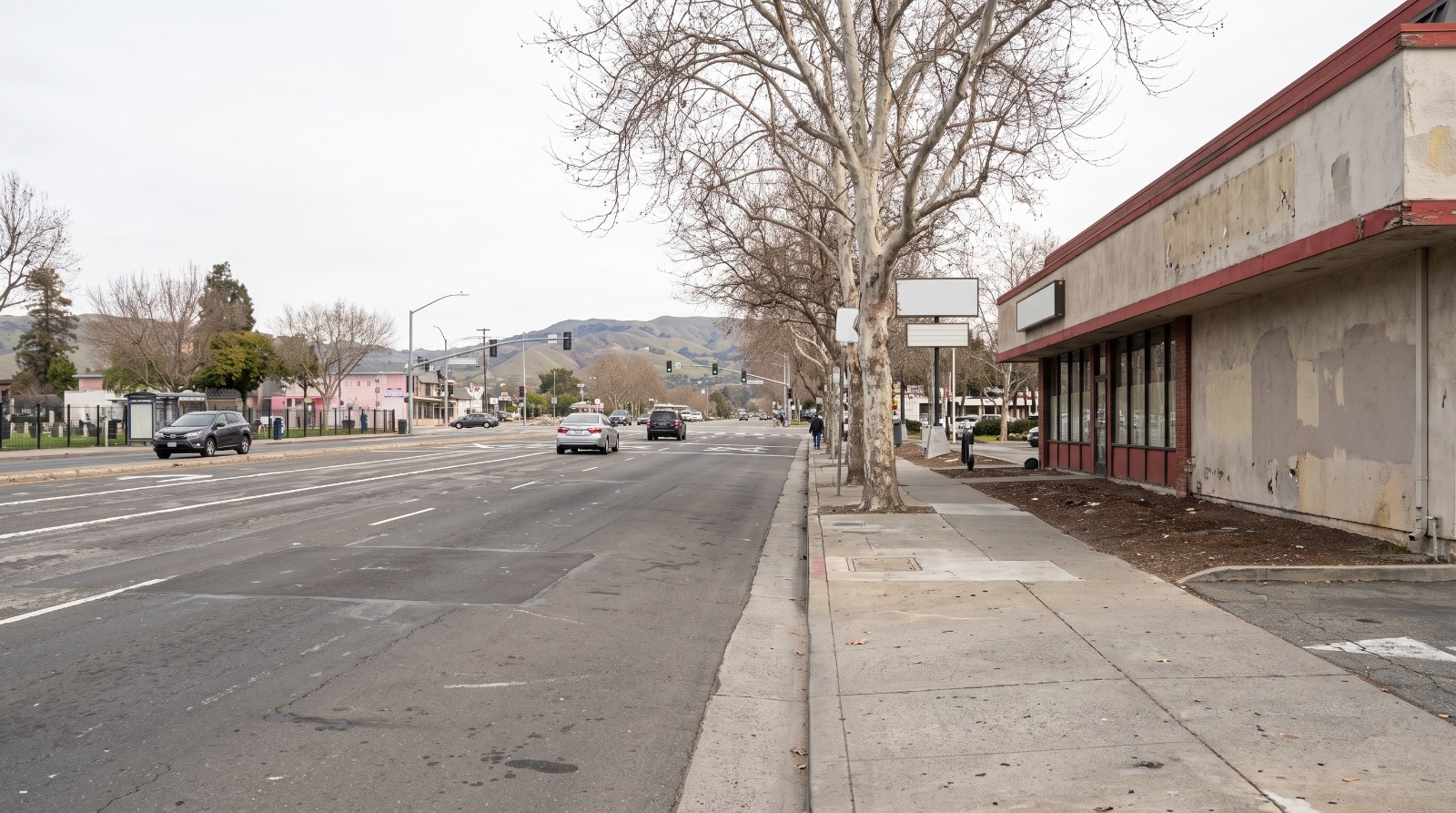
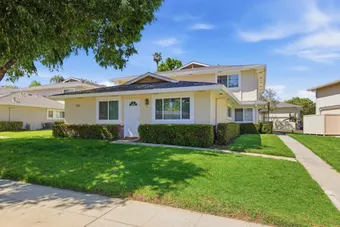
AI-rendered view of Alum Rock Avenue near South Capitol Avenue in East San Jose, inside the Eastside Alum Rock plan area Photo: Houseberry
San Jose has 16 planners writing the land-use rules for a city of nearly a million people, and they have a year and a quarter of work for every year of time. A memo from planning director Christopher Burton, dated October 13 and headed to the council's economic development committee on October 26, puts the team's work plan for this fiscal year at 126 percent of available staff capacity. That is about 4.3 planners' worth of work with nobody assigned to it.
The part that matters for anyone who owns or wants to buy along Alum Rock Avenue or Saratoga Avenue is what sits at the back of that line. The neighborhood plans that decide what can be built on those corridors are local work, and the memo says about 90 percent of the team's plan is driven by state mandates. The state gets served first. By Houseberry's September 2026 price history, the neighborhoods waiting on those plans run from Roosevelt Park at about $825,000 to Cory at about $2.31 million.
Why the state comes first
San Jose does not get to choose the order. A city that falls behind on its state-approved housing plan, the Housing Element, can lose grant money and its say over projects. So the memo puts the General Plan four-year review and Housing Element actions at the top. That review is the one that could put four to 10 homes on lots that hold one house today.
Then come the new state laws. SB 79, the 2025 law that raises heights near transit stations, took "substantial analysis" last year and spun off two new ordinances, the memo says. Every fall, staff read whatever the governor signed and figure out how much of the zoning code has to change.
Regional rules stack on top. The Metropolitan Transportation Commission's Transit Oriented Communities policy requires San Jose to set minimum densities within a half mile of 54 stations in or next to the city, or lose access to grants like the One Bay Area Grant program. The city has about $1.4 million to do that work at 26 stations, roughly $54,000 a station. The other 28 have no grant money attached. The memo expects the job to take two to three years.
And the long clock never stops. The four-year review work is supposed to wrap by December 2027. In January 2028 the same team pivots to the next Housing Element, targeted for June 2030 and legally due January 2031.
What gets pushed back
Local priorities lose. The October 13 memo is blunt about it: city priorities "have been either delayed or indefinitely backlogged," and it names one. The zoning update to deal with vape shops, a council ask, is stuck.
The urban village plans are the bigger casualty. San Jose has 62 urban villages, the corridors and centers where its General Plan sends new homes and jobs. Only 16 had approved plans as of November 2025, according to SV@Home's report on the four-year review, and a plan takes about three and a half years on average. In the unplanned ones, most developable lots are still zoned for commercial use only, SV@Home found. A builder who wants apartments there has to wait for the plan or ask for a General Plan change, which joins those seven requests in the queue.
Three villages are next in line.
| Plan | Where | Status in the October 13 memo | Next date |
|---|---|---|---|
| Five Wounds | Little Portugal and the blocks around the future 28th Street BART station | Final draft, counted as Housing Element work | Hearings late fall 2026 |
| Eastside Alum Rock | About 61 acres on Alum Rock and South Capitol avenues, between I-680, Capitol Expressway and Manning Avenue | Being drafted, more outreach this fall or winter | Council in early 2027 |
| Saratoga Avenue | Saratoga Avenue from I-280 to Lawrence Expressway, including Westgate | Tied to the four-year review's environmental work | Parks meeting November 9, hearings late 2027 |
The table comes from the memo and the city's pages for Five Wounds, Eastside Alum Rock and Saratoga Avenue. Five Wounds is the safest of the three because the city files it as Housing Element work. We covered its environmental review in September, when the plan proposed raising capacity in a 427-acre slice of East San Jose from 2,022 homes to 8,022.
Saratoga Avenue is the slowest. Its first community workshop was in December 2024. If hearings land in late 2027 as the city's page says, that is three years, close to the citywide average, and the date depends on a four-year review the memo itself calls contingent on the council.
Two very different corridors are waiting
The villages stuck behind the state work are not alike. Houseberry's price history puts the typical home in Little Portugal at about $1.07 million in September 2026, down from $1.13 million a year earlier. In Roosevelt Park, on the other side of the Five Wounds church, it was about $825,000. Along Alum Rock Avenue, the Alum Rock neighborhood sat near $992,000 and Capitol Goss near $955,000.
Cross to the west side and the numbers jump. Bucknall, Payne and Cory, the tracts that back onto Saratoga Avenue, ran $2.10 million to $2.31 million in September.
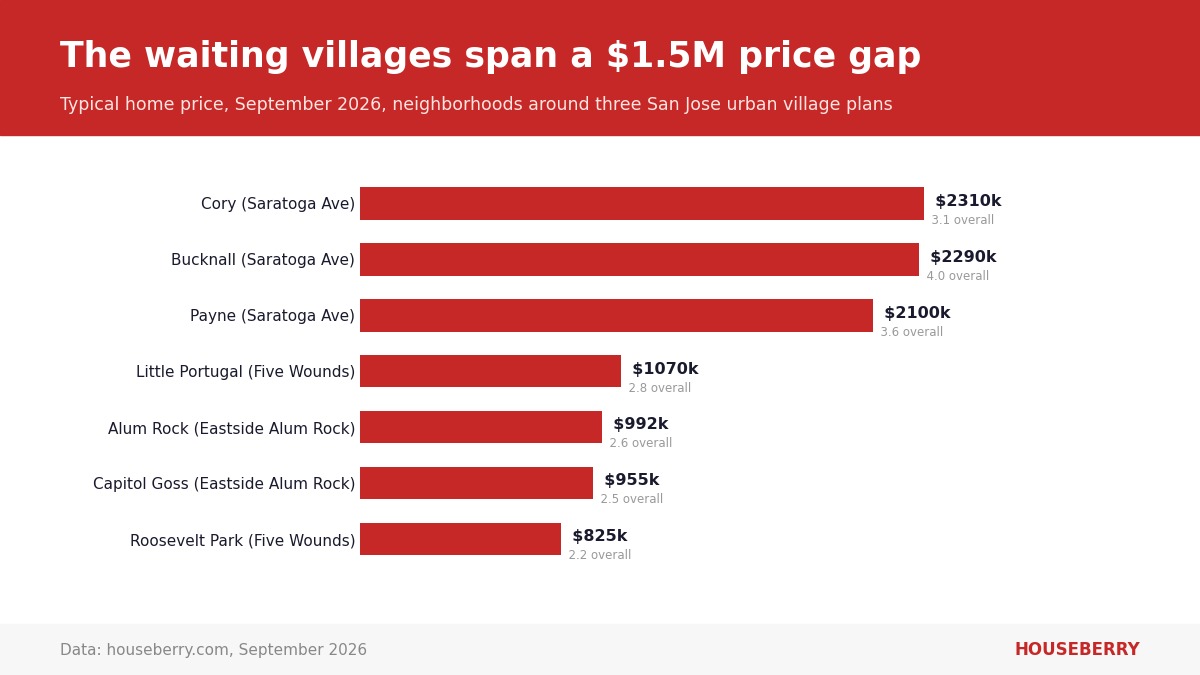
Put the seven together and the Saratoga Avenue trio averages about $2.23 million, 2.3 times the $961,000 average of the four East San Jose neighborhoods. The scores split the same way. The Saratoga side averages 3.6 out of 5 on Houseberry's overall score, and the East San Jose four average 2.5, with Bucknall ranked 10th of 112 in the city and Roosevelt Park 108th.
So the same backlog lands on two kinds of owners. On the east side, the plans are the path to new housing, shops and the growth around a BART station people have been promised for years. On Saratoga Avenue, where Westgate and El Paseo de Saratoga already draw traffic, the plan decides how tall the corridor gets next to some of the most expensive single-family streets in the city.
What we think the council should do
The council took up the trade-offs on October 20. Staff gave it a menu of what to keep, defer, narrow, resequence or drop through December 2027. The outcome had not been posted when we wrote this. Staff will report it to the committee on October 26.
We think the honest answer is staff. Triage only decides who waits. When state work alone uses more than all 16 planners can do, the local plans will slip no matter how the list is sorted, and the urban village plans are the local work that actually produces homes. The memo says staff will size up long-term staffing in the 2027-28 budget. That is the vote that matters, and 4.3 planners is the gap it has to close.
What an owner or buyer can do now
If you live near Alum Rock Avenue, the Eastside Alum Rock outreach this fall or winter is the last real chance to shape the plan before it heads to the council in early 2027. If you are on the west side, the November 9 Saratoga Avenue meeting is about parks, which is usually where nearby owners have the most to say. Either way, read a plan's timeline as a range. In San Jose right now, "early 2027" is a hope.
Buying near a corridor with no adopted plan is a bet on the date it arrives. Before you make it, compare the blocks on either side of the corridor on Houseberry's San Jose neighborhood ranking, or pull them up street by street on the map.
Sources
- San Jose PBCE, Citywide Planning Activities Semi-Annual Status Report, October 13, 2026 (CED Committee item (d)3, October 26)
- City of San Jose, Saratoga Urban Village Plan
- City of San Jose, Eastside Alum Rock Urban Village Plan Update
- City of San Jose, Five Wounds Urban Village Plan Update
- SV@Home, General Plan 4-Year Review meeting on speeding up urban village planning, November 13, 2025
The Houseberry Research Team is Houseberry's reporting team: Bay Area real estate analysts, data specialists and longtime local market watchers. Every day we check the public record: building permits, city council and planning agendas, county recorder filings, state housing bills, police incident data and school results. Then we tie each story to what it means for specific neighborhoods, using Houseberry's own neighborhood data on prices, appreciation, safety, schools and amenities. Questions or corrections: Contact us.
Map of San Jose Neighborhoods
Loading map...
View Full Map
Top Neighborhoods in San Jose, CA


All information provided on this website including but not limited to - school ratings, safety, amenities, user opinions, and property data - is for general informational purposes only. We do not guarantee its reliability, accuracy, or completeness. Users should independently verify information and consult appropriate professionals as needed. By using this website, you agree Houseberry is not responsible for actions, decisions, or consequences arising from reliance on the information provided
houseberry.com - CA DRE# 01847391
 Bay East ©2025. CCAR ©2025. bridgeMLS ©2025. Information Deemed Reliable But Not Guaranteed. This information is being provided by the Bay East MLS, or CCAR MLS, or bridgeMLS. The listings presented here may or may not be listed by the Broker/Agent operating this website. This information is intended for the personal use of consumers and may not be used for any purpose other than to identify prospective properties consumers may be interested in purchasing. Data last updated at October 21, 2026 12:00 AM