Newsom Signs Townhome, ADU and Concord Base Bills: What Changes
SB 328 took effect the moment Newsom signed it on September 29. Here is what it, AB 1751 townhome streamlining, SB 1117 ADU fees and two factory-built bills change for Bay Area owners and builders, and when.
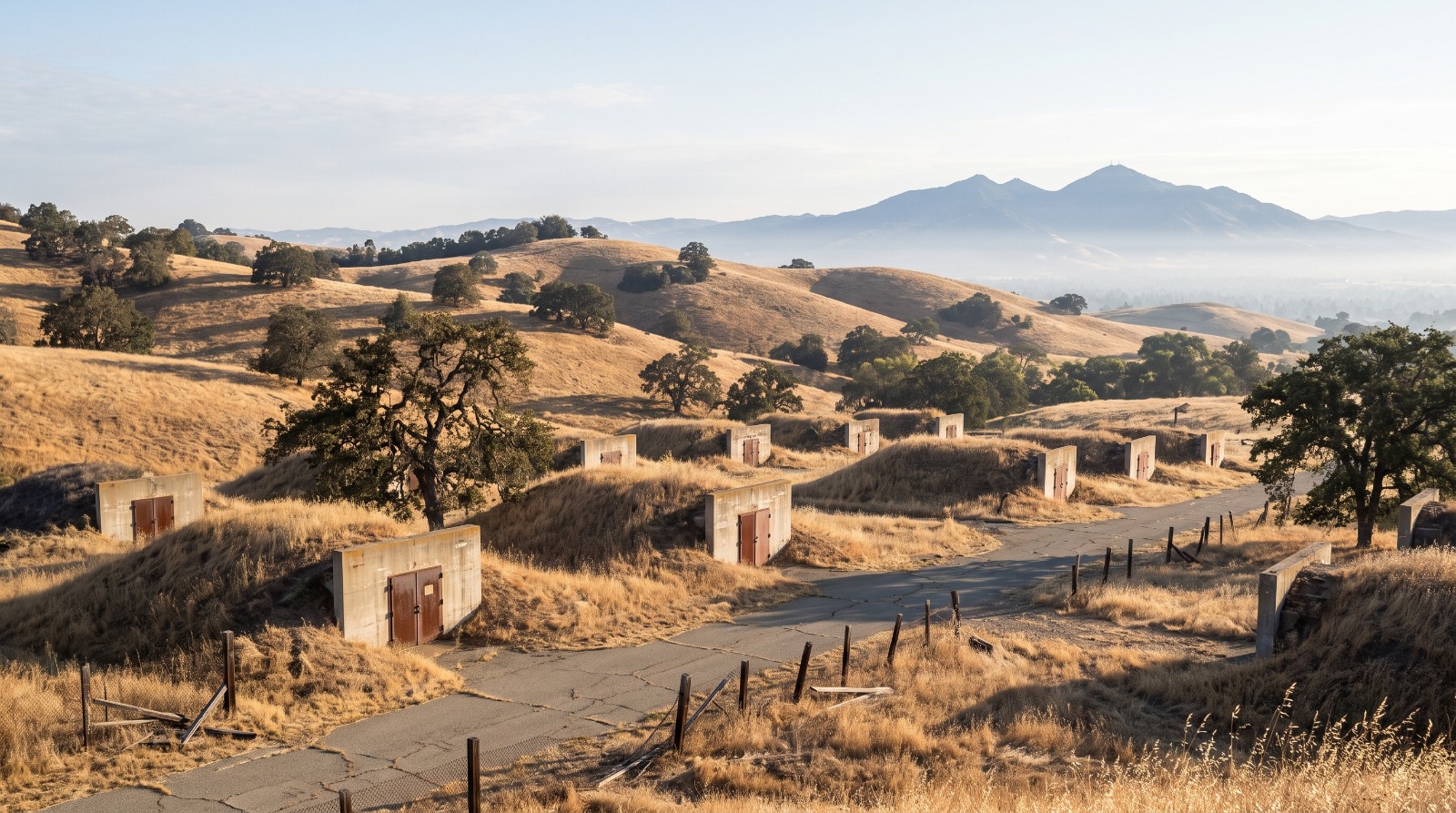
Grass-covered bunkers on the former Concord Naval Weapons Station below Mount Diablo, focus of a newly signed housing bill. Photo: Houseberry
One bill in Tuesday's housing package is already law. SB 328, Senator Tim Grayson's bill for the former Concord Naval Weapons Station, carries an urgency clause, so it took effect the moment Governor Newsom signed it on September 29, 2026. Almost everything else he signed that day waits for January 1, 2027.
That split is the most useful way to read the package. The Governor's office listed 34 housing and homelessness bills signed in San Francisco on Tuesday. We already took two of them apart, AB 956 and its two detached ADUs and SB 1116's small-lot splits, so this piece covers what is new since our September 2 list, sorted by who actually feels it.
The September 2 scorecard, settled
Nine of the eleven bills we flagged on September 2 are now law. AB 956, SB 1117, SB 1116, SB 1014 and AB 2074 came through on Tuesday. The insurance pair, SB 1301 on non-renewal notice and AB 1680 on FAIR Plan oversight, were signed September 27 along with AB 739 on HOA managing agent fees, according to the Governor's September 27 update.
One correction to our September 21 piece. We wrote that none of the eleven had moved. AB 2576, the historic-site carve-out from SB 79, was actually on the Governor's September 14 list. We missed it.
That leaves AB 1684, the right to install air conditioning in a common interest development, and SB 677, the SB 79 cleanup bill. Today is the deadline, and under Article IV, Section 10 of the state constitution a bill he neither signs nor vetoes by September 30 becomes law anyway. So a veto is the only outcome that matters for those two, and we have not seen one.
Here is everything new since then that reaches a Bay Area lot, in one place.
| Bill | What it does | Takes effect | Who feels it |
|---|---|---|---|
| SB 328 (Grayson) | Lets prior environmental reviews satisfy CEQA for projects on the former Concord Naval Weapons Station, tied to 25% lower-income housing | Immediately, Sept. 29, 2026 (urgency statute) | Concord, especially north Concord near North Concord/Martinez BART |
| AB 1751 (Quirk-Silva) | Ministerial map approval for all-townhome subdivisions on multifamily land or vacant single-family lots | Jan. 1, 2027 | Townhome builders and buyers everywhere except San Francisco |
| SB 1117 (Cervantes) | ADU impact fees charged only on square footage above 750 | Jan. 1, 2027 | Owners building an ADU larger than 750 sq ft |
| AB 1815 (Wicks) | Cities cannot hold factory-built housing to building standards beyond the state code, except for local climate, geology or topography | Jan. 1, 2027 | Modular builders and anyone ordering a factory-built ADU |
| AB 2058 (Harabedian) | Caps local inspection and permit fees on factory-built housing and allows state-approved agencies to inspect installation | Jan. 1, 2027, with installation rules due by Jan. 1, 2029 | Same as AB 1815 |
| AB 1621 (Wilson) | No more than two plan-check rounds, and permit appeals decided in 30 or 45 business days | Jan. 1, 2027 | Anyone pulling building permits for a housing project |
Read the third column before anything else. Only one of these changes anything this year, and it is the one attached to a 2030 groundbreaking.
If you live near the Concord base, the legal risk just got smaller
SB 328 does not approve a single house. What it does is take the biggest legal risk off the table for the largest housing plan in the Bay Area.
The Naval Weapons Station's inland area covers 5,028 acres inside Concord city limits, next to North Concord/Martinez BART. Concord's plan with master developer Brookfield calls for 12,272 homes, 3,068 of them deed-restricted affordable, plus about 6 million square feet of commercial space, according to The Real Deal's account of the May approval. In May the City Council unanimously approved the money side of the deal with the Navy, roughly $628 million over about 30 years, with the first transfer of about 1,000 acres scheduled for 2030.
Under SB 328, projects consistent with the city's area plan can rely on environmental documents Concord already completed. The land deal has to restrict at least 25 percent of the homes to lower-income households, for 55 years on rentals and 45 years on owner-occupied homes. Grayson's office put it plainly: the bill will "leverage already completed environmental reviews to help get shovels in the ground sooner." Concord Mayor Laura Nakamura called it certainty to move "from vision to reality."
Why that matters: a fresh CEQA lawsuit against the Specific Plan could have added years to a project that has already spent almost two decades in planning. The trade-off is real too. The reviews it leans on are old, starting with a notice of preparation filed in 2007, and Highway 4 traffic and the remediation still ahead have not stood still since. The park acreage is settled. The traffic math is not.
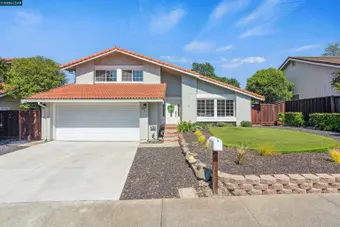
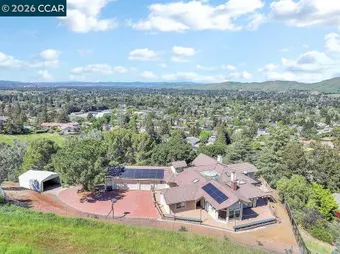
What does that mean for existing homes? Concord's citywide median was about $804,600 in August 2026, on our Concord city page. Sun Terrace, the older single-family pocket at the city's far northern edge near Olivera Road and Highway 4, ran about $729,100 in August and scores 2.6 of 5 overall, with amenities at 2.6. North Willow Pass, between downtown and the base, was about $745,100 and scores 3.0. At the other end of our 42-neighborhood Concord ranking, hillside Crystyl Ranch scores 4.3 at about $1.4 million.
The north Concord neighborhoods score lowest on everyday amenities, and they sit closest to a plan with 6 million square feet of commercial space and 55 acres set aside for schools. That is the upside, on a 2030s timeline rather than a 2027 one. (If you want something moving sooner, the city is also working on a roughly 900-home plan for the old Coast Guard housing off Haleakala Street.)
If you want to build or buy a townhome, AB 1751 is the big one
AB 1751, the Missing Middle Townhome Ownership Act, turns a qualifying townhome subdivision into a checklist approval starting January 1, 2027. No hearing, no planning commission vote, and no CEQA review of the map.
The details, from the enrolled text:
- A townhome is a single-family dwelling of no more than three occupiable stories that shares a wall or sits a fire separation distance from its neighbor. New parcels can be as small as 600 square feet.
- Eligible land is zoned for multifamily housing, or zoned only for single-family and underutilized, meaning no permanent home on it unless that home is abandoned and uninhabitable.
- Very high fire hazard severity zones, wetlands, prime farmland, flood zones and conservation land are out. So is demolishing rent-controlled homes or units taken off the rental market in the past 15 years.
- Construction workers must earn at least $28 an hour, adjusted each year for inflation.
- A city can deny only with written findings of a specific health or safety impact it cannot mitigate. San Francisco is exempt entirely.
The line that decides where this bites is the density test. A project must reach at least 75 percent of the default density in state housing element law. By our reading, for a city of more than 25,000 people in a metro area our size that default is 30 homes per acre, so the floor lands at 22.5. Smaller towns such as Atherton or Moraga use a 20-per-acre default, which puts their floor at 15.
We ran that test against five townhome projects we have reported on this year. Two clear it.
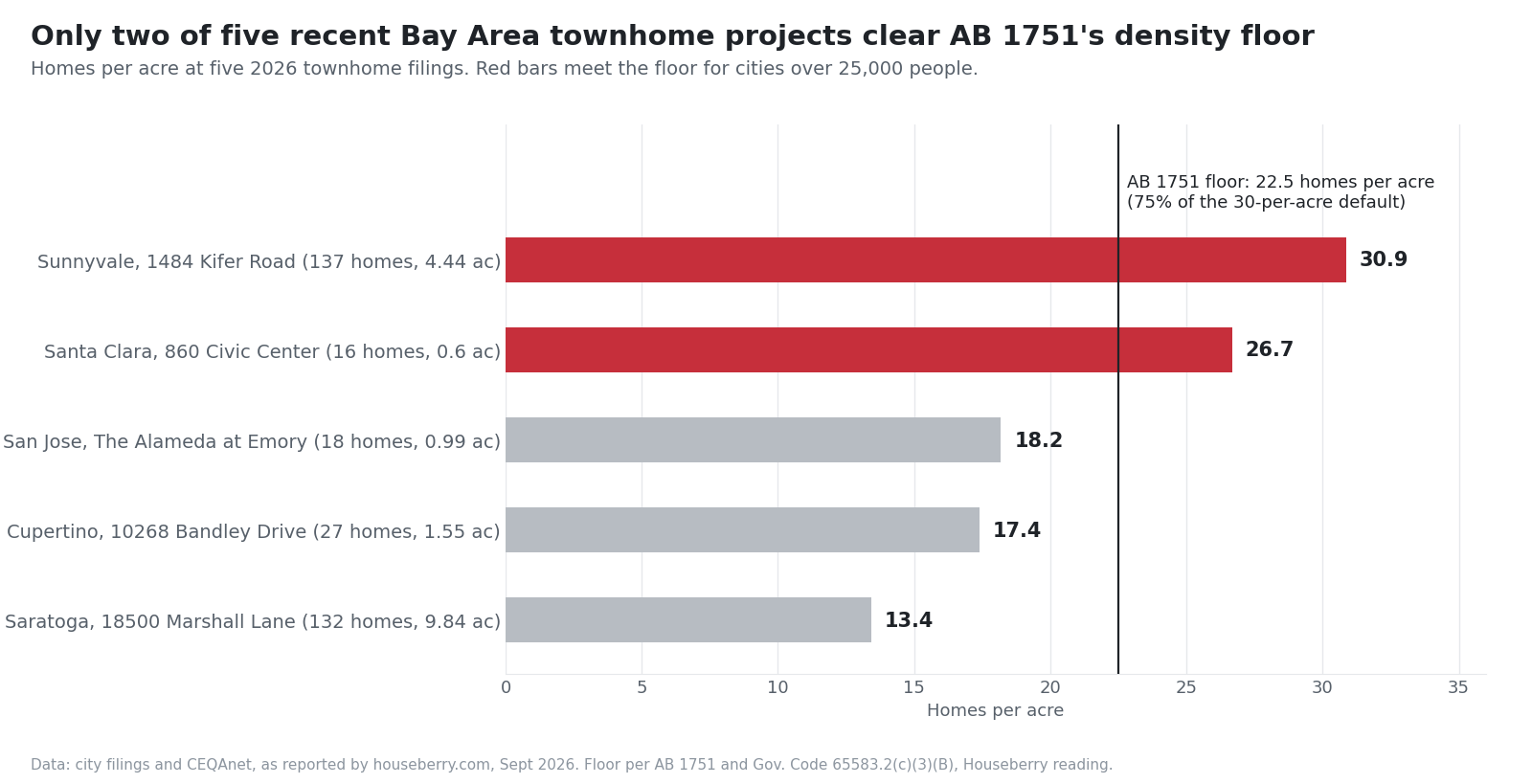
Sunnyvale's 137 townhomes on Kifer Road and Santa Clara's 16 at 860 Civic Center would qualify on density. Cupertino's 27 on Bandley Drive at 17.4 per acre, San Jose's 18 at The Alameda and Emory and Saratoga's 132 on Marshall Lane would not. The bill rewards the tight three-story rowhouse over the roomier suburban townhome most cities still ask for.
So watch the cities with plenty of multifamily-zoned land that still send townhome maps through hearings: Sunnyvale and Santa Clara, San Jose's urban villages, the Concord corridors. The fire exclusion does the opposite in the Oakland and Berkeley hills and much of Orinda, which sit largely in very high fire hazard zones. And the honest limit: AB 1751 removes the hearing and the lawsuit. It does not lower the price of land, which is what kills most Bay Area townhome deals.
If you have a backyard, SB 1117 is the fee fix
SB 1117 means that starting January 1, 2027, a city can charge impact fees only on the part of an ADU above 750 square feet.
Units of 750 square feet or less were already exempt. Above that line, current law lets a city charge fees proportional to the main house on the whole unit, so crossing the line by one square foot could trigger fees on all of it. Take a 1,000-square-foot ADU behind a 2,000-square-foot house. By our reading, today's fee is half of what a new house would pay. Under SB 1117 it is one-eighth.
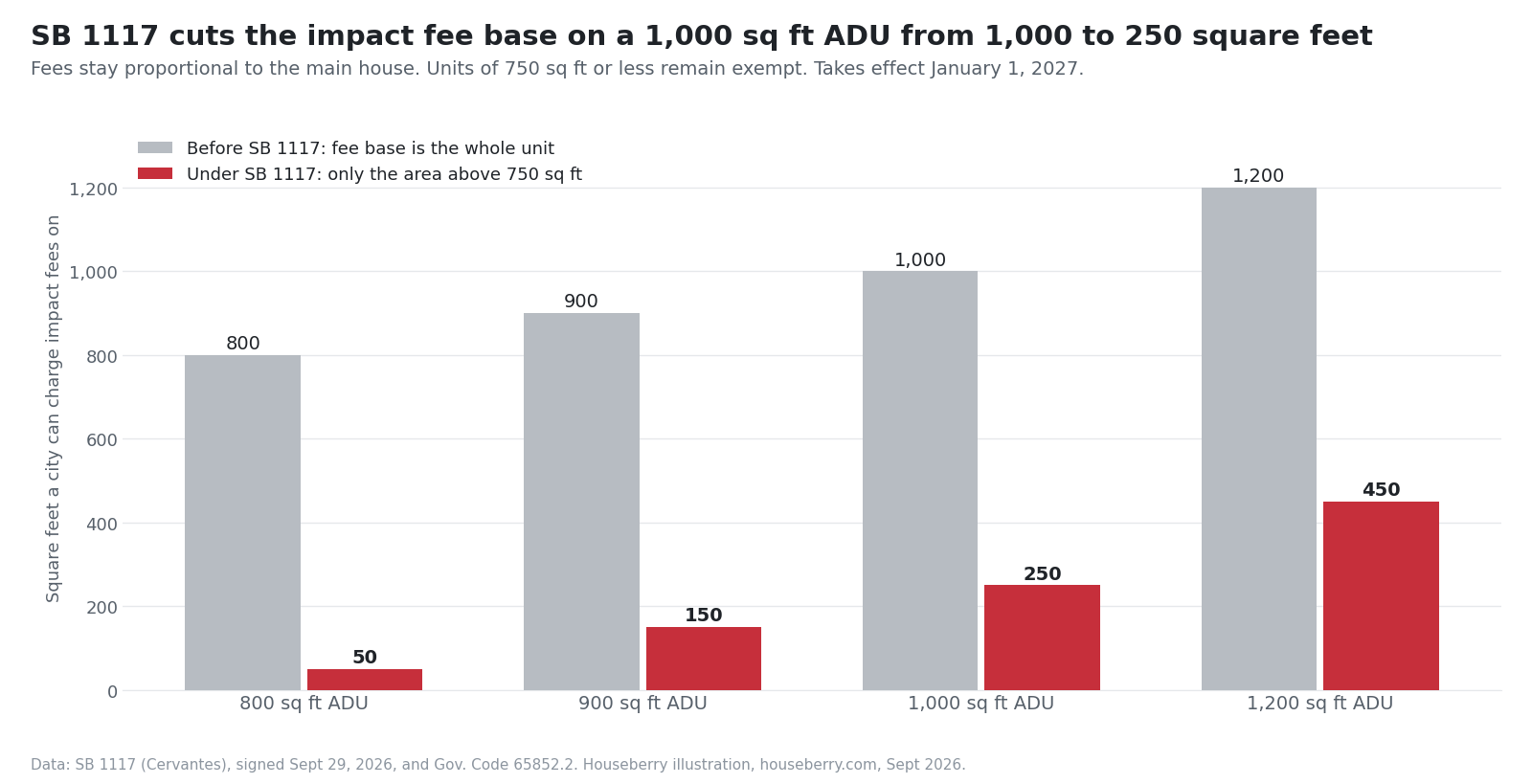
Pair that with AB 956's second detached unit and the 2027 backyard gets noticeably cheaper to fill. We covered what AB 956 trades away in its own piece, and the rules already in force this year in July, so we will not repeat either here.
If you are betting on factory-built homes, the fight moved to City Hall
Eleven days after vetoing a state backstop for housing factories' surety bonds, Newsom signed the two bills aimed at the other bottleneck, local rules. AB 1815, by Oakland's Buffy Wicks, bars cities from holding factory-built housing to building standards that exceed or differ from the state code, except where local climate, geology or topography requires it. It also creates a presumption in favor of treating a project as factory-built.
AB 2058 caps what local agencies can charge to inspect and permit factory-built housing, bars inspectors from taking units apart to check them, and lets state-approved quality assurance agencies handle installation inspections once rules are written, due by January 1, 2029. For the Bay Area's big prefab ADU market, the practical gain is one set of rules instead of a different one in every city.
Permits get two hard deadlines
AB 1621 limits cities to two rounds of plan-check review and forces permit appeals to be decided within 30 business days for projects of 25 units or fewer and 45 business days above that. Missing those deadlines becomes a Housing Accountability Act violation, which lets a builder go to court to compel approval.
SB 1014, another Grayson bill, requires an itemized list of required onsite and offsite improvements within 30 business days. The sewer upgrade that shows up after the budget is set is how small infill projects die. This makes the city name it early.
Questions people are asking
When do the new California housing laws take effect?
Most take effect January 1, 2027. SB 328 took effect immediately on September 29, 2026. AB 2074 gives major transit cities until July 1, 2027 to designate hub districts, and most of SB 1301's insurance protections begin January 1, 2028.
Does AB 1751 apply in San Francisco?
No. The bill says it does not apply to the City and County of San Francisco. It applies to every other Bay Area city, subject to the site exclusions and the density floor.
Can I build townhomes on my single-family lot under AB 1751?
Not if your house is on it. Single-family-zoned land qualifies only when it has no permanent home, or the home is abandoned and uninhabitable. For an occupied lot, SB 9 and the SB 1116 changes are the paths to look at.
Does SB 328 mean construction starts soon at the Concord base?
No. It removes a legal hurdle. The Specific Plan still has to be finished, and the first land transfer from the Navy is scheduled for 2030.
Faster lanes, same traffic
Line the biggest three up and a pattern shows. The state keeps building faster lanes, and much of what Bay Area cities approve is designed for the slow one. Three of our five townhome filings fall short of AB 1751's floor. The Concord base has its fast lane and a 2030 start.
Whether any of this reaches a street near you depends less on Sacramento than on how your city zoned the land, which is the layer we keep coming back to when we compare neighborhoods on Houseberry. Concord's ranking is a fair place to see what that looks like block by block.
Sources
Office of the Governor, "Governor Newsom signs housing legislation," September 29, 2026
Office of the Governor, legislative update, September 27, 2026
Office of the Governor, bills signed September 14, 2026
CalMatters Digital Democracy, SB 328 bill record
CalMatters Digital Democracy, AB 1751 bill record
AB 1751 enrolled text, September 3, 2026, via LegiScan
CalMatters Digital Democracy, SB 1117 bill record
CalMatters Digital Democracy, AB 1815 bill record
CalMatters Digital Democracy, AB 2058 bill record
CalMatters Digital Democracy, AB 1621 bill record
Office of Sen. Tim Grayson, SB 328 signing release, via EIN Presswire
Contra Costa News, Governor Newsom signs SB 328, September 30, 2026
Contra Costa News, Concord council to review Navy financial agreement, May 13, 2026
The Real Deal, Concord approves Brookfield deal for Navy station homes, May 27, 2026
CEQAnet, 10268 Bandley Drive Residential Development Project, June 2026
Houseberry, Concord city page, neighborhood pages and rankings, retrieved September 30, 2026
Map of Concord Neighborhoods
Loading map...
View Full Map
Top Neighborhoods in Concord, CA



All information provided on this website including but not limited to - school ratings, safety, amenities, user opinions, and property data - is for general informational purposes only. We do not guarantee its reliability, accuracy, or completeness. Users should independently verify information and consult appropriate professionals as needed. By using this website, you agree Houseberry is not responsible for actions, decisions, or consequences arising from reliance on the information provided
houseberry.com - CA DRE# 01847391
 Bay East ©2025. CCAR ©2025. bridgeMLS ©2025. Information Deemed Reliable But Not Guaranteed. This information is being provided by the Bay East MLS, or CCAR MLS, or bridgeMLS. The listings presented here may or may not be listed by the Broker/Agent operating this website. This information is intended for the personal use of consumers and may not be used for any purpose other than to identify prospective properties consumers may be interested in purchasing. Data last updated at October 1, 2026 12:00 AM