Sunnyvale’s Lawn Rule Skips Front Yards, Not HOA Entrances
Ornamental lawns at Sunnyvale office parks and HOA common areas lose drinking water irrigation in 2028 and 2029 under AB 1572, and the City Council takes its first vote on a local ordinance on October 6.

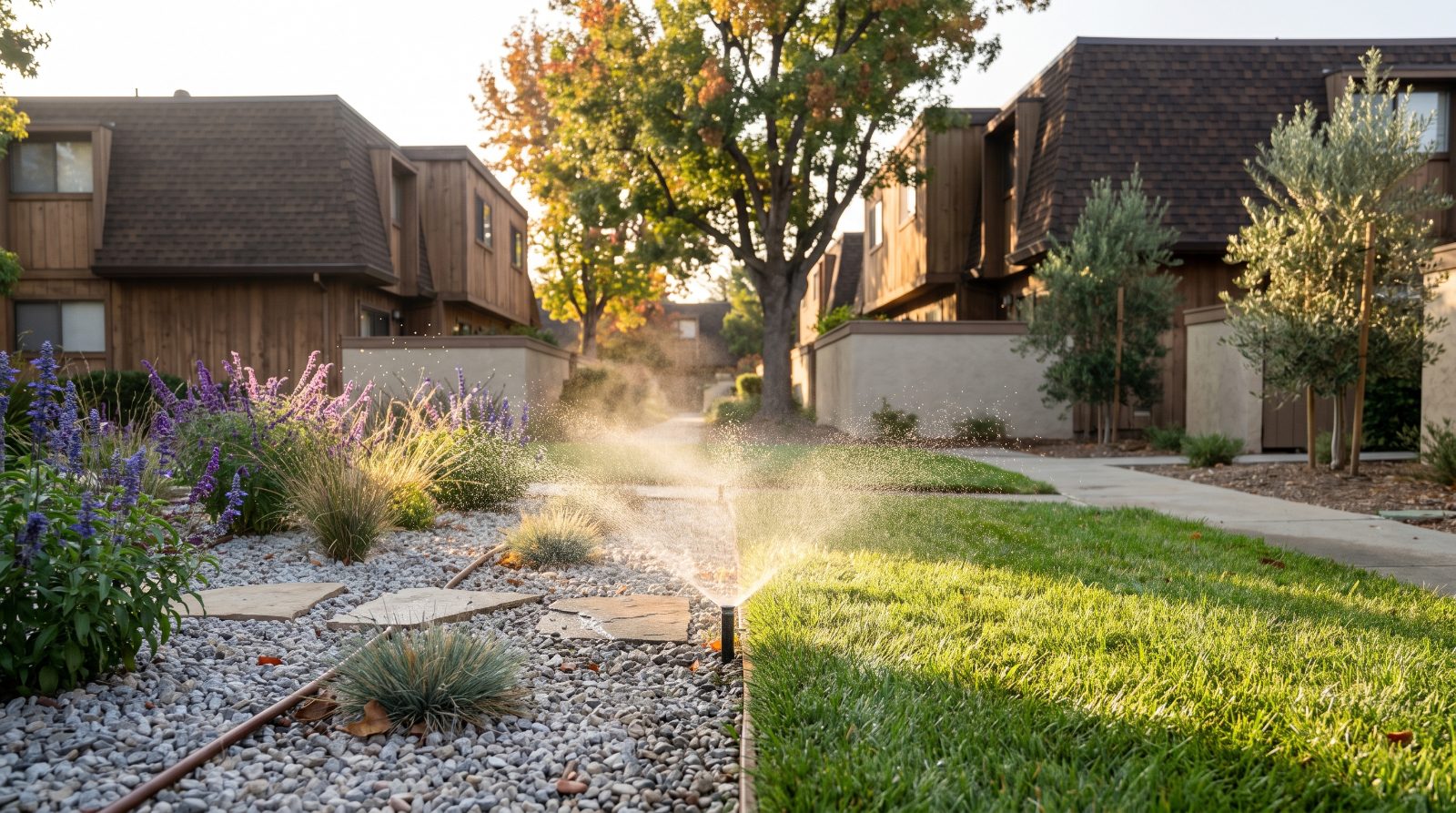
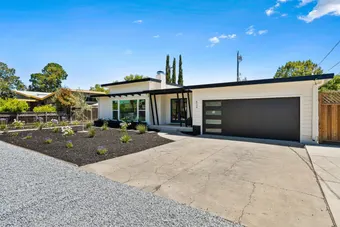
Lawn meeting a new drought tolerant garden at a Sunnyvale townhome entrance as the city takes up AB 1572 Photo: Houseberry
Grass edging an office parking lot or a townhome complex’s entry walk counts as nonfunctional turf under AB 1572, the state law that bans watering it with drinking water. On Tuesday, October 6, 2026, the Sunnyvale City Council holds a public hearing and first vote on an ordinance that writes the law into the city’s water conservation code.
Nonfunctional turf means ornamental lawn nobody uses for recreation or gatherings. The law covers it on public, commercial, industrial, institutional and HOA common-area land. Single-family front yards are not covered.
Our September piece on California’s lawn ban and curb appeal covers the statewide law and HOA assessment rules, and its deadlines match Sunnyvale’s.
What Sunnyvale’s AB 1572 ordinance covers
The ordinance adopts AB 1572 by reference, so Sunnyvale’s rules move in step with the state’s. The city’s code already bars drinking water on ornamental turf in public street medians, and the new language extends that to the property types and dates in state law. Turf watered with recycled water falls outside the ban, according to the staff report.
Under the chaptered bill text, turf is functional when it sits in a recreational use area or community space. Everything else is nonfunctional, including grass in street rights-of-way, parking lots and fenced-off areas. Watering is still allowed where it keeps trees and other perennial plants healthy or meets an immediate health and safety need, and Sunnyvale’s nonfunctional turf page suggests aiming sprinklers at tree canopies or switching to drip.
| Deadline | Who must stop watering nonfunctional turf with drinking water |
|---|---|
| January 1, 2027 | State properties, plus local governments, public agencies and public water systems outside disadvantaged communities |
| January 1, 2028 | Commercial, industrial and institutional properties, such as office parks, retail centers and private campuses |
| January 1, 2029 | Common areas of HOAs, common interest developments and community service organizations |
| January 1, 2031 | Public properties in disadvantaged communities, or later if state funding arrives later |
| Not covered | Single-family homes and the private yards of HOA members |
Sites with more than 5,000 square feet of irrigated area also certify compliance to the State Water Resources Control Board every three years, starting June 30, 2030 for commercial sites and June 30, 2031 for HOAs.
HOA boards, office parks and a wording question for apartments
Office campuses fall under the 2028 commercial deadline. Condo and townhome associations have until 2029, and staff plan a final round of outreach aimed at HOAs before then. The same date would apply to common areas at newer townhome communities, such as the 137 townhomes approved on Kifer Road, once they have an association.
Staff write that the initial emphasis will be on education and voluntary compliance, backed by the administrative penalties already in Chapter 12.34. State law separately makes noncompliance subject to civil liability under Water Code section 1846. Staff expect no fiscal impact for now.
Apartment owners may want to read the draft ordinance attached to the agenda. The staff recommendation’s summary line lists multifamily residential properties, a category the chaptered state law does not name, while the report’s discussion describes HOA and common interest development common areas.
A separate report on the same agenda, the city’s artificial turf policy study, covers public parks only and says private-property standards need further study.
Where in Sunnyvale the 2029 deadline shows up
Our neighborhood reviews describe Serra, Ortega and Ponderosa as mostly single-family homes, so most lawns there stay the owner’s call. The rule reaches further into neighborhoods that mix in apartment complexes, mixed-use buildings and light industry: the Heritage District around Murphy Avenue and the Caltrain station, East Murphy, and West Murphy, home to the Sunnyvale Municipal Golf Course.
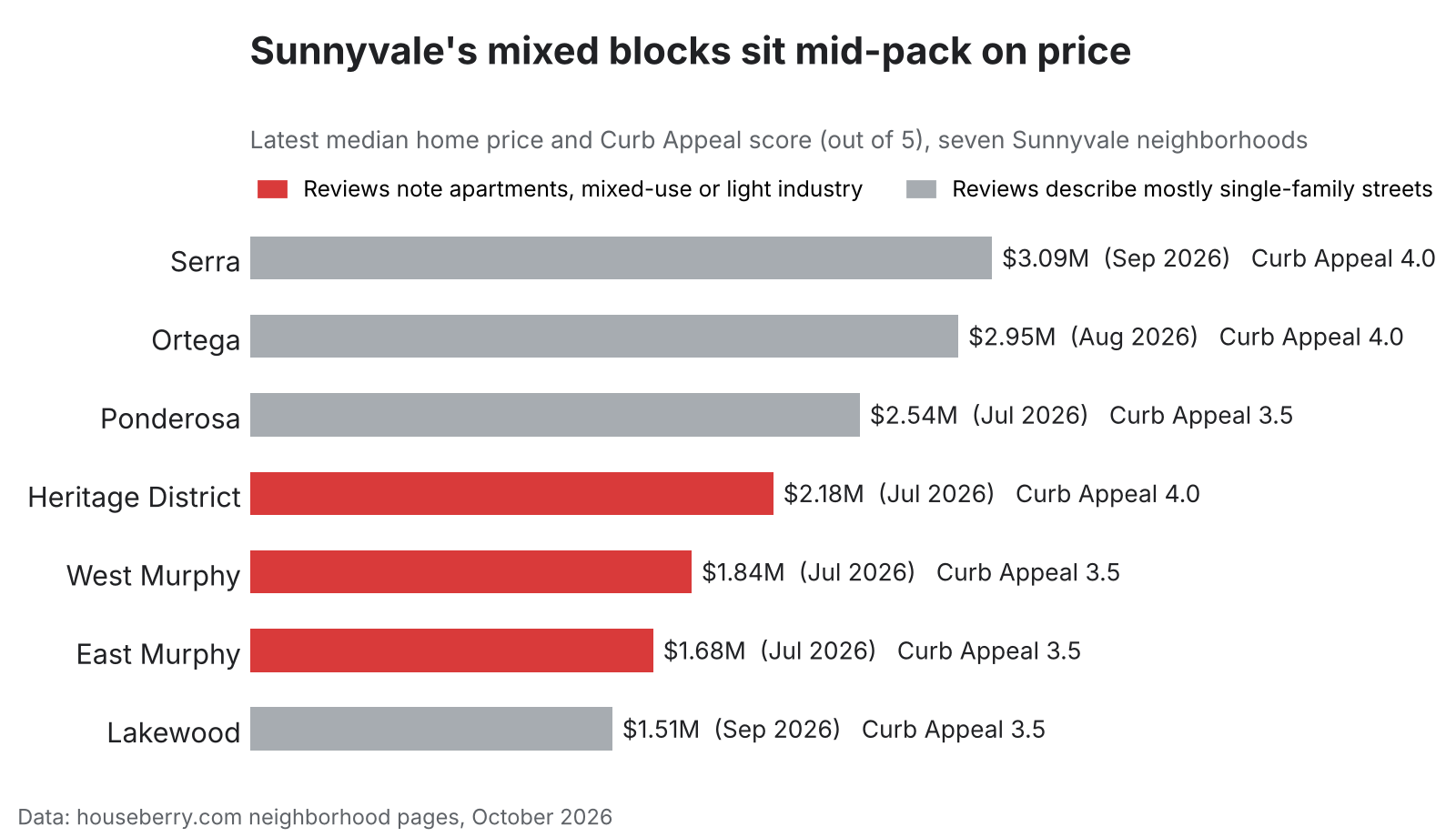
Every neighborhood in our Sunnyvale neighborhood rankings scores 3.5 or 4.0 out of 5 on Curb Appeal and 4.0 or higher on Public Spaces, with the Heritage District on top at 4.5. Citywide, Sunnyvale’s median was about $2.46M in September 2026.
What to check before 2029
- Walk the common areas with the definition in hand. Grass along parking lots, driveways and entry walls is the likeliest to count as nonfunctional. A lawn people use for play or gatherings can stay.
- Ask the landscaper which zones run on recycled water or keep trees alive.
- Apply to Valley Water before any digging. Its landscape rebate pays $2 a square foot, capped at $100,000 for commercial sites and multifamily properties of five or more units and $3,000 for single-family homes, and work cannot start until Valley Water issues a written Notice to Proceed.
- Put the conversion in the reserve study. Our September piece covers how HOA assessments work.
- Watch for the second vote. The ordinance returns at a later meeting for adoption.
The council meets at 7 p.m. at City Hall and online. Questions about a specific property go to the city’s Environmental Services Department at green@sunnyvale.ca.gov.
Sources
- City of Sunnyvale, File 26-0442, AB 1572 ordinance staff report, City Council meeting of October 6, 2026
- City of Sunnyvale, City Council meeting details, October 6, 2026
- AB 1572 (Friedman), chaptered text, Chapter 849, Statutes of 2023
- State Water Resources Control Board, Nonfunctional Turf Bill (AB 1572)
- City of Sunnyvale, Nonfunctional Turf
- Valley Water, Landscape Rebates
- Median prices and scores from houseberry.com Sunnyvale city and neighborhood pages, July to September 2026
The Houseberry Research Team is Houseberry's reporting team: Bay Area real estate analysts, data specialists and longtime local market watchers. Every day we check the public record: building permits, city council and planning agendas, county recorder filings, state housing bills, police incident data and school results. Then we tie each story to what it means for specific neighborhoods, using Houseberry's own neighborhood data on prices, appreciation, safety, schools and amenities. Questions or corrections: Contact us.
Map of Sunnyvale Neighborhoods
Loading map...
View Full Map
Top Neighborhoods in Sunnyvale, CA


All information provided on this website including but not limited to - school ratings, safety, amenities, user opinions, and property data - is for general informational purposes only. We do not guarantee its reliability, accuracy, or completeness. Users should independently verify information and consult appropriate professionals as needed. By using this website, you agree Houseberry is not responsible for actions, decisions, or consequences arising from reliance on the information provided
houseberry.com - CA DRE# 01847391
 Bay East ©2025. CCAR ©2025. bridgeMLS ©2025. Information Deemed Reliable But Not Guaranteed. This information is being provided by the Bay East MLS, or CCAR MLS, or bridgeMLS. The listings presented here may or may not be listed by the Broker/Agent operating this website. This information is intended for the personal use of consumers and may not be used for any purpose other than to identify prospective properties consumers may be interested in purchasing. Data last updated at October 3, 2026 12:00 AM